The Science

Research that makes work better.

Friday is built on research about what makes work feel meaningful, sustainable, and motivating over time. Here's the thinking behind our driver model, why we use PERMA+, and how employee input becomes guidance that's practical, respectful, and easy to act on.

Foundation

PERMA+ as the organising model

Friday uses PERMA+, a research-backed framework from positive psychology developed by Martin Seligman. It covers Positive Emotions, Engagement, Relationships, Meaning, and Achievement, plus a "+" layer that captures the conditions around work, like health and context.

We use PERMA+ as a map. Not to score people, but to make sure feedback lands in a structure that is consistent over time. It helps separate signals that otherwise get mixed, such as low energy, low clarity, and low connection, and it gives teams a shared language for what is going on.

Driver model

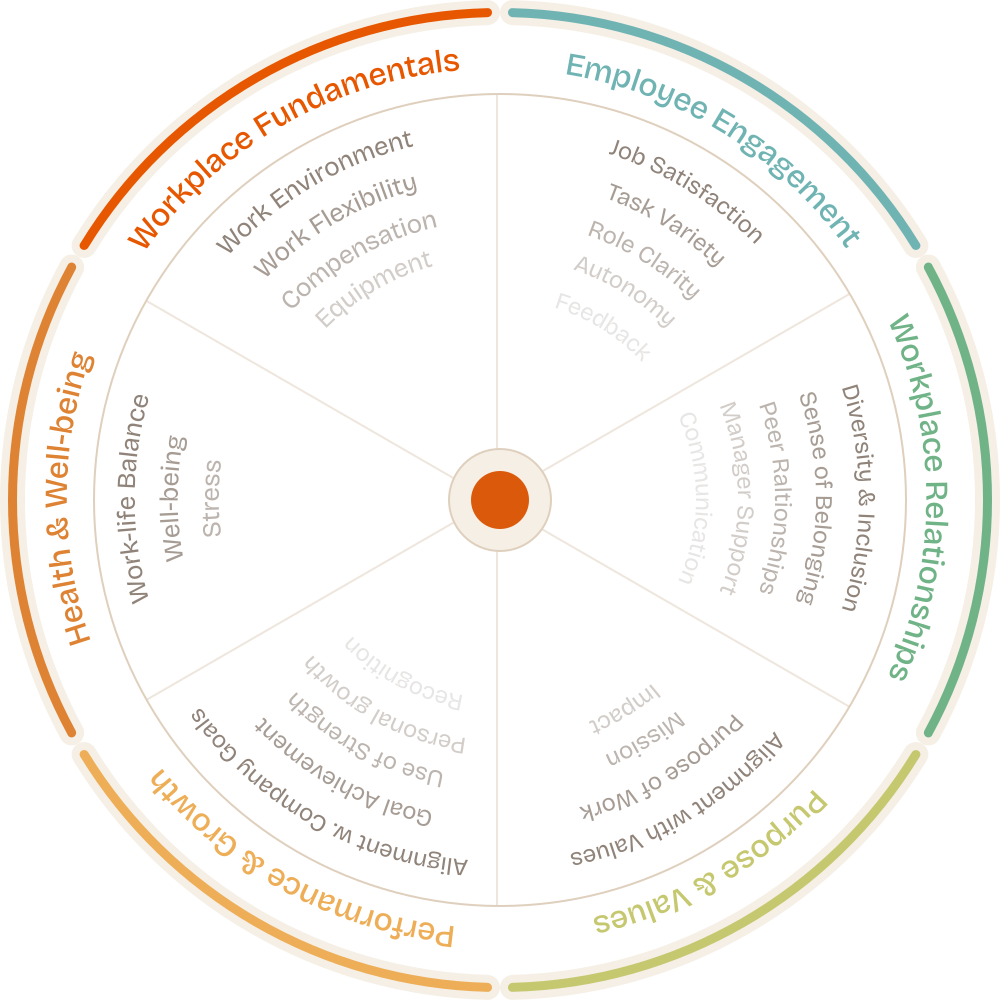
How Friday maps driversand topics to PERMA+

Our drivers are built by mapping what employees write and rate to the PERMA domains, then using the "+" layer for practical conditions that strongly affect day-to-day engagement.

The + layer

Conditions that shape whether people can thrive

Health & Well-being

Personal well-being.

Workplace Fundamentals

Compensation, equipment, work environment, work flexibility.

This is where a lot of practical friction lives. The point is not to over-measure, but to keep categories tight enough that feedback can be interpreted reliably.

Outside PERMA+

Diversity & Inclusion

Diversity & Inclusion is included as a topic within Workplace Relationships because it directly affects belonging, respect, and day-to-day collaboration.

It is not part of the original PERMA+ framework as defined by Seligman, but it is important to organisations that work deliberately with inclusion and fairness. In practice, stronger inclusion supports stronger relationships, better collaboration, and a more consistent sense of belonging across teams.

Recommendations

The research behind the guidance

Friday does not just use research to decide what to recommend. We use it to shape how recommendations are made, so they feel realistic to act on and support how trust and engagement are built in real teams.

01

Psychological safety

Amy Edmondson's work on psychological safety acts as a filter for recommendations. It helps ensure suggested actions are safe to take and do not unintentionally increase fear or silence in a team.

Employee recommendations often focus on small, low-risk steps: asking for clarity, raising friction early, testing assumptions, or requesting support without escalating conflict. Manager recommendations focus on responding in ways that protect safety while still addressing the issue.

02

Leadership that earns trust

Simon Sinek's work shapes how Friday frames recommendations around leadership, trust, and clarity. The core idea is that engagement follows trust, and trust is built through everyday behaviour.

When feedback points to confusion, overload, or tension, the recommendation is not simply "communicate more". It gives guidance on how to lead in a way that builds trust, increases clarity, and supports shared responsibility.

03

Scandinavian collaboration norms

We lean into Scandinavian collaboration norms because AI recommendations otherwise tend to drift toward two unhelpful extremes: very individual advice, or very one-sided organisational advice.

In flat, high-autonomy teams, engagement is built through shared responsibility, good communication, and clear agreements. Friday's recommendations support dialogue over assumptions, collaboration over silos, shared agreements over vague expectations, and responsibility that is distributed rather than dumped on one person.

See the model in practice

Read how Friday was used during a real organisational transition at Vestjysk Bank.